





While this is a useful starting point, it doesn’t tell the whole story. The final investment in a high-quality, durable floor coating is a comprehensive figure based on several critical variables.
Understanding these elements is key to appreciating the value and longevity you receive from a professional installation. This guide breaks down the five most significant factors that determine the final cost, helping you see exactly what goes into creating a perfect, long-lasting floor.
The Condition of Your Existing Concrete
The state of your concrete slab is the true foundation of your project, and it is often the biggest variable in the final price. A brand new, perfectly smooth slab requires less work than an older, damaged one.
Repairs for Cracks & Spalling
A coating system will only be as smooth and durable as the surface it’s applied to.
Existing damage, such as cracks from settling, pitting from winter road salts, or spalling where the surface is flaking away, must be meticulously repaired. Our technicians grind out and fill these imperfections with specialized mending products to create a solid, monolithic surface.
This essential repair work requires extra time and materials, which are factored into the project’s cost to ensure the final result is flawless and built to last.
Critical Moisture Mitigation
Concrete is like a sponge, and moisture moving up through the slab is a leading cause of floor coating failure. This is why professional installers like Endless Poxybilities always conduct moisture testing.
If high levels of moisture vapor transmission are detected, we must apply a specialized moisture-mitigating primer. This creates a barrier that prevents moisture from getting trapped and causing the floor to bubble.
The Level of Surface Preparation
How the concrete is prepared before any coating is applied is just as important as the materials themselves. This crucial stage ensures a permanent bond and is a significant part of the overall cost.
Professional Diamond Grinding
The industry standard for preparing concrete is mechanical diamond grinding. This process uses heavy-duty machines with diamond-segmented abrasives to remove the top layer of concrete.
It creates a rough, porous surface profile, similar to sandpaper. This allows the base coat of the epoxy to penetrate deeply into the slab and form an unbreakable mechanical bond. This step is non-negotiable for a professional result and is far superior to the ineffective acid etching method used in DIY kits.
Removing a Previous Failed Coating
Many of our projects involve fixing a floor where a previous coating—often a low-quality paint or a DIY epoxy kit- has failed. Before we can apply a new, high-performance system.
This is a labor-intensive process that requires mechanically grinding the entire surface until we reach a clean, stable layer of concrete.
The extra time, labor, and equipment required to remove the failed product are necessarily factored into the total project cost to ensure the new floor has a proper foundation to bond with.
Material Quality and The Coating System
Not all epoxy is created equal. The quality and type of materials used in your flooring system are a major factor in both the cost and the long-term performance and durability of the floor.
Industrial-Grade VS Water-Based DIY Kits
Professional installers use 100% solid epoxy and polyaspartic materials.
These are industrial-grade products that are significantly thicker, stronger, and more chemically resistant than the thin, water-based coatings found in hardware store DIY kits. While professional materials have a higher upfront cost, they provide vastly superior durability against hot tires, abrasion, and chemical spills.
This commitment to quality means you are paying for a permanent solution, not a temporary paint job that will likely fail and need to be replaced.
Epoxy vs. Advanced Polyaspartic Systems
Modern, high-performance flooring is typically a multi-layer system designed for optimal performance.
At Endless Poxybilities, we often use a 100% solid epoxy as a primer and base coat because of its incredible adhesion. We then apply a polyaspartic topcoat.
Polyaspartic coatings are more advanced, offering superior UV stability (so they won’t turn yellow), greater flexibility, and better chemical and scratch resistance.
This hybrid system approach costs more than a simple, single-material application but provides the best possible combination of strength and long-lasting beauty for your floor.
The Project’s Size and Complexity
The overall size of the area to be coated is a primary driver of the final price, as it directly determines the amount of material and labor required. A large 1,000-square-foot basement will naturally cost more than a small 400-square-foot garage. However, complexity also plays a key role.
A simple, rectangular room is more straightforward to coat than a space with multiple rooms, tight corners, numerous support poles, or vertical surfaces like stairways or foundation walls. These intricate areas require more detailed handwork and precision, which can increase the labor time involved.
Your Desired Finish and Design
The final appearance of your floor is a key part of the project, and the aesthetic you choose will have a direct impact on the overall cost, as different styles require different materials and application techniques.
Solid Colors vs. Full Flake Systems
A simple, solid-color epoxy floor is generally the most economical option.
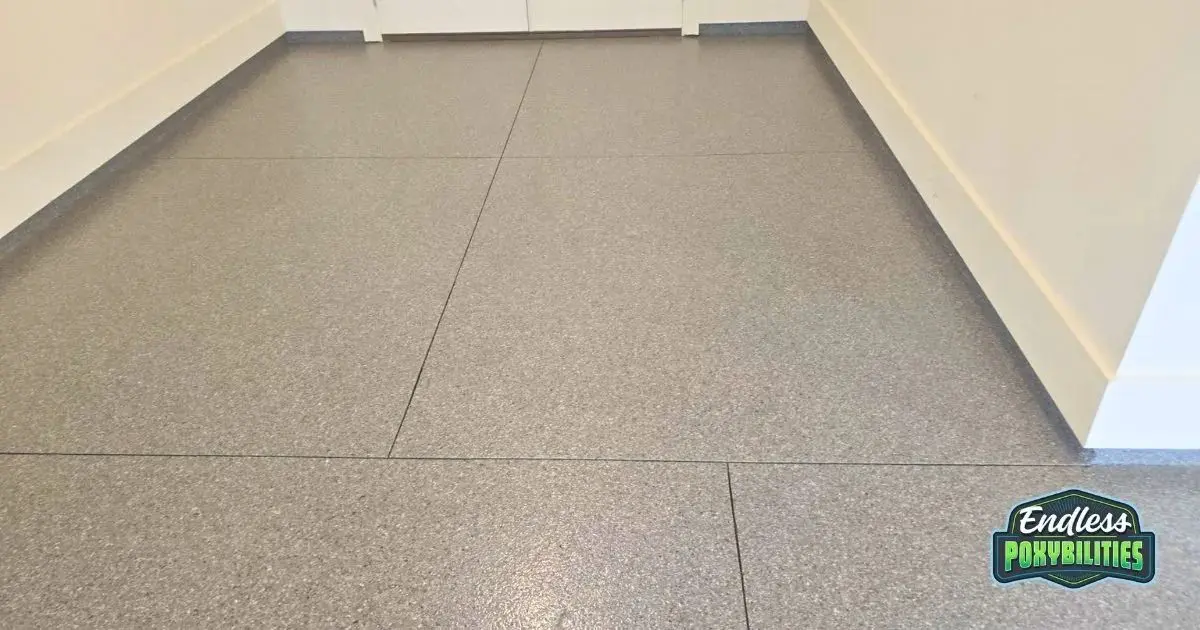
It provides a clean, uniform, and highly durable surface. However, our most popular choice for both garages and basements is the decorative full-flake broadcast system. In this process, vinyl flakes are broadcast in a dense layer over the base coat to create a textured, granite-like appearance.
This system not only looks great but also hides minor imperfections. The additional materials and labor make it a mid-range option that offers an exceptional balance of beauty and performance.
Premium Metallic & Custom Finishes
For a truly unique, high-end look, metallic epoxy floors are the premium choice. This system uses metallic pigments mixed into the epoxy to create a glossy, three-dimensional floor with flowing, lava-like patterns.
Each metallic floor is a one-of-a-kind work of art that requires a high level of skill and artistic technique to apply correctly. Similarly, creating custom logos, intricate patterns, or developing unique color blends requires more design time and precise application.
These premium and custom finishes represent the top end of the price scale.
Why a Custom Quote is Essential
As you can see, the price of an epoxy floor is determined by much more than just the square footage.
The unique condition of your concrete, the quality of the system, and the design you choose all play a critical role. This is why a one-size-fits-all price is impossible to provide accurately over the phone.
To get a reliable and transparent price for your project, an on-site evaluation is essential.
Contact Endless Poxybilities today to schedule a free, no-obligation consultation in the Twin Cities area.
We’ll assess your space and provide a detailed quote.



